

 You can keep colors the same in bulk orders by making clear rules and checking each part of production. This helps your brand look special and makes customers trust you. Studies show that having the same colors makes your brand stronger and easier to remember.
|
Key Insight |
Explanation |
|---|---|
|
Color Consistency Importance |
Keeping colors the same is important for your brand’s look. |
|
Consumer Tolerance |
Customers are okay with small color changes more than experts think. |
|
Strategic Approach |
Brands should use colors people know and keep them the same, not just try for perfect matches. |
Many companies have problems like changes in materials, how dye soaks in, and working in different places. You can stop expensive mistakes and unhappy customers by acting early and checking every batch.
Why Color Consistency Matters
Brand Identity Impact
You want your brand to stand out in a crowded market. Color consistency helps you do this. When you use the same colors across all your products, people recognize your brand faster. Your brand style guide gives you the rules for using colors. If you follow these rules, you make your brand easy to spot.
-
A brand's color connects with customers. People link certain colors to specific companies.
-
Clear brand identity helps you compete. If customers cannot identify your brand, they may pick another.
-
Using your brand style guide for every order keeps your colors the same. Even small changes in color can make your brand look less reliable.
-
Consistent use of colors makes your brand recognizable, even without a logo or name.
You should match colors on every product, package, and ad. Your brand style guide helps you do this. When you keep color consistency, you protect your brand's image.
Customer Trust
Customers trust brands that look the same every time. Color consistency builds this trust. Your brand style guide tells you which colors to use. When you follow it, you show customers that you care about quality.
-
Consistent brand colors help customers feel safe and familiar with your products.
-
The psychology of color shows that blue makes people feel trust and confidence.
-
Studies say color affects 60 to 80% of buying choices.
-
Almost 85% of people say color is the main reason they buy something.
-
80% of people think color helps them remember brands.
You can see the effect of color consistency in the table below:
|
Brand Awareness Level |
Inconsistent Color Presentation (Mean) |
Consistent Color Presentation (Mean) |
F-value |
p-value |
|---|---|---|---|---|
|
High |
4.81 |
3.95 |
26.08 |
< 0.05 |
|
Low |
4.08 |
4.47 |
7.24 |
0.008 |
If you use your brand style guide and keep colors the same, you help customers trust your brand. You also make your brand stronger and easier to remember.
Setting Color Standards
Choosing Standardized Color Systems
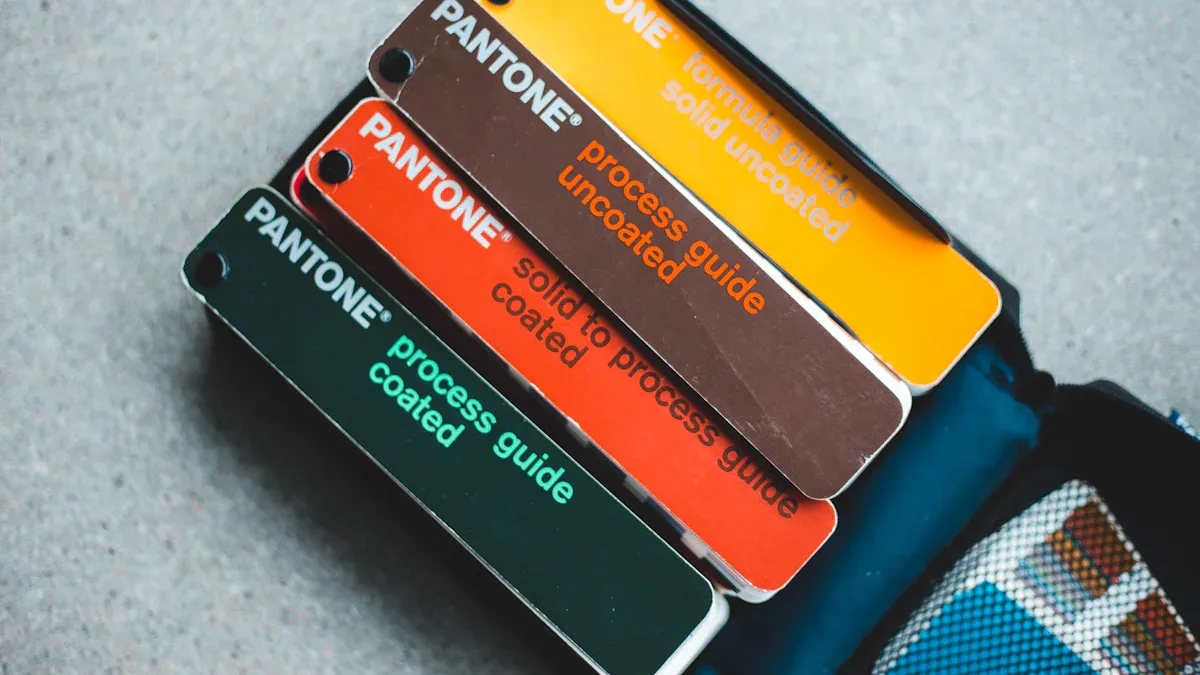
You must pick clear color standards before you order a lot. This helps stop mistakes and keeps things simple. Many companies use special color systems so products look the same. The pantone matching system is a trusted tool for this. It gives exact color codes for printers and factories. You can also use the CMYK model for boxes and ads.
Here is a quick look at the most common color systems:
|
Color Model |
Description |
|---|---|
|
CMYK |
This color model is used for printing packages. It mixes four ink colors to make many shades. It works well for product pictures and ads. |
|
Pantone |
This system uses special inks for exact colors. It helps keep colors the same in different places and printers. |
Always put these color codes in your brand style guide. This guide helps your team and suppliers follow the same rules. The pantone matching system is good for logos, uniforms, and branded things. Using the same system every time keeps your brand style guide strong.
Sharing Digital Color References
Digital color references make matching colors easier. You can send these files to suppliers so everyone uses the same shades. Digital references give formulas that work with many materials and inks. This helps you get the right color the first time.
Here are some ways digital color references help you:
|
Evidence Point |
Description |
|---|---|
|
Standardized Formulations |
Digital color references give formulas that think about things that change color results. This helps keep colors the same for every job. |
|
Accurate Color Matching |
The database changes color targets into ink formulas. This makes sure you get the right color the first time by thinking about the material and ink type. |
|
Simplified Process |
Using a database makes matching colors faster and easier. This is important when you order a lot. |
|
Consistency Across Locations |
Digital references help keep brand colors the same in different places and shifts. |
|
Material Savings |
Getting the right color the first time saves materials and cuts down on waste. This makes everything work better. |
Add digital color files to your brand style guide. This helps you keep colors the same, even if you change suppliers or factories. Using both a brand style guide and digital references protects your brand’s look and makes sure every product matches.
Working with Suppliers for Consistency
Clear Communication
You need to work closely with your suppliers to keep your colors the same. Start by sharing your brand style guide with every supplier. This guide tells them the exact colors, materials, and finishes you want. Write down your color, material, and finish details on all your drawings and order forms. This step helps you avoid mistakes.
-
List every color you use in your product and packaging.
-
Use Pantone or RAL codes for each color.
-
Give your suppliers digital files from your brand style guide.
You should also ask your suppliers to use the same digital color library. This keeps color reproduction accurate, even if you work with factories in different places. When you set clear rules, you help your suppliers match your brand style guide every time.
|
Key Factors |
Description |
|---|---|
|
Operator Expertise |
Workers must know how to use color tools and software. |
|
Equipment Performance |
Machines must be clean and set up the right way. |
|
Environmental Factors |
Factories must control things like heat and humidity. |
Requesting Color Proofs
Before you start a big order, ask for color proofs. These are samples that show what your final product will look like. You can get both physical and digital proofs. Physical proofs let you see and touch the color on real material. Digital proofs show you how the color will look on a screen.
Proofing helps you find and fix mistakes early. You can check if the color matches your brand style guide. If you see a problem, you can ask for changes before the full order starts. This step saves you money and stops waste.
Proofs also help you see colors that might look different on screens. By checking a sample, you make sure the final product matches your brand style guide. This process gives you more control and helps you keep your brand strong.
|
Benefits |
Description |
|---|---|
|
Reduced Lab Dips |
You need fewer samples for approval. |
|
Local Decision Making |
Suppliers can fix problems faster. |
|
Consistent Quality |
Every product matches your brand style guide. |
Tip: Always keep a copy of your approved proof. Use it to check every batch you receive.
Production Monitoring for Color Consistency

Watching production is important for keeping colors the same. You need to check each step to make sure colors match your brand. This helps you avoid mistakes that cost money. It also keeps your customers happy.
Device Calibration
You have to set up your devices before making products. Calibrating makes sure screens and printers show the right colors. If you skip this, your products may not have the right colors.
Here are some ways to calibrate devices:
-
Pick a color space like sRGB or Adobe RGB for all your work.
-
Use special tools to measure and fix colors on each device. These tools make a color profile for your machines.
-
Calibrate your devices often to keep colors correct.
You can use tools like X-Rite’s i1Display Pro and Datacolor’s SpyderX. Software like Adobe Photoshop and Adobe Lightroom also help with color profiles. These tools help your devices work together and keep colors true.
When you check sample materials, you should follow industry rules. The table below shows how experts check colors:
|
Evidence Type |
Description |
|---|---|
|
Color Standards |
Give reference points so makers meet what customers want. |
|
Measurement Methods |
Use spectrophotometers to compare colors. They look at things like thickness and opacity. |
|
Standardization |
Groups use color comparators and scales like ASTM and EBC to measure colors. |
Digital tools like ColordesQ and Computer Color Matching Systems help you get very close matches. These tools use smart sensors and computer programs to match colors. They help stop mistakes and save materials, which is good for big orders. ColordesQ is a leader in textiles because it gives better color matches and helps work go faster. You get the right color the first time, so you save time and money.
Tip: Always set up your devices before each production run. This keeps your brand’s colors the same and your products looking good.
On-Site Checks
You need to check colors at the factory while making products. This helps you find problems early and fix them fast. Watching and reporting during production keeps color quality high.
-
Set up a strong system to find color changes quickly.
-
Do regular checks to make sure your team follows the rules.
-
Use real-time reports to watch color results and make quick choices.
If you see color problems, fix them right away. Do not wait until production ends. Fast action keeps colors the same and protects your brand.
Note: Checking colors at the factory helps you find and fix problems before customers see them.
You can use spectrophotometers and color comparators for these checks. These tools help you compare samples and make sure every batch matches your standards. As technology gets better, digital tools like ColordesQ make checks faster and more exact.
By watching production closely, you keep colors true and make sure every product meets your brand’s needs. You build trust with customers and keep your brand looking great.
Avoiding Lack of Color Consistency
Common Pitfalls
You can run into problems with color consistency in bulk orders. The materials you pick matter a lot. Different fibers take in dye in their own way. Cotton and polyester blends often do not color evenly. Using the wrong dye can make colors fade or look bad. Changing dyeing methods or temperature can cause color changes in each batch.
Problems can happen during production too. Bad dyeing or poor processes can make samples and final products look different. If dyes and chemicals are not managed well, raw materials can change the color. Sometimes, the timing of dyeing can cause contamination and uneven colors.
The environment also affects color. Light changes how you see color. Sunlight and fluorescent lamps can make the same item look different. High humidity makes materials soak up water. This can make colors look dull.
Tip: Always check colors in the same light to avoid mistakes.
Preventive Steps
There are ways to stop color consistency problems. First, set and save your color standards digitally. This lets your team use the original color data. Think about how colors will look on different materials to set good expectations.
Use tools to measure and control color. Spectrophotometers and colorimeters help you check color in every batch. Densitometers watch ink levels. Color viewing booths let you see colors under the same light. Digital imaging systems find color problems fast.
Pick materials that work well with your dyes. Keep your dyeing process steady by watching temperature and how you put on dye. Always handle dyes and chemicals with care.
|
Tool |
Purpose |
|---|---|
|
Spectrophotometer |
Measures color accurately |
|
Colorimeter |
Checks for color variations |
|
Densitometer |
Monitors ink consistency |
|
Viewing Booth |
Evaluates color under set lighting |
|
Digital Imaging |
Finds color defects in large batches |
If you follow these steps, you can avoid costly mistakes and keep your brand colors strong.
Maintaining Consistent Brand Colors Long-Term
Keeping Color Records
You should keep good color records for every bulk order. These records help you match colors in the future. Digital tools can help you track and manage these records. You can store color formulas, sample pictures, and notes of approval. Digital systems make it easy to share color data with your team and suppliers.
Here is a table with some digital tools you can use:
|
Feature Level |
Description |
|---|---|
|
Datacolor Tools Basic |
This is a simple QC system with fewer features. |
|
Datacolor Tools Plus |
This package has full color control and lets you check color limits and do data analysis. |
|
Datacolor Tools Plus Workstation |
This is a low-cost station for viewing data. It lets you use full color QC but not create new data. |
You need to update your color records after each production run. Save your approved samples and digital files. This helps you find changes and fix problems before customers notice.
Tip: Always keep backup copies of your color records in a safe place. This helps protect your brand if you switch suppliers or factories.
Building Supplier Relationships
Good relationships with suppliers help keep your brand colors the same. When you work with the same suppliers, you get better results. Suppliers learn your rules and know how to match your colors. You can trust them to use the right materials and printing methods.
-
Suppliers use the same materials for every order.
-
They follow your printing rules and color codes.
-
You get products that look the same each time.
Ordering in bulk from trusted suppliers keeps your brand colors true. You avoid mistakes and surprises. Suppliers who know your brand can fix problems fast. You build trust and save time.
Note: Working with the same suppliers for a long time helps keep your brand strong and your colors the same.
You can keep colors the same in bulk orders by making clear rules. Watch how things are made and work with your suppliers. Using the same brand colors helps your business get noticed. It also makes people trust your products. You should check your progress with important numbers:
|
Metric |
Q1 Score |
Q2 Score |
Goal |
|---|---|---|---|
|
Color Match Consistency |
89% |
93% |
≥ 97% |
Check colors often and use digital tools to help with dyeing. Talk to your suppliers so you can share color information and fix problems fast. If you do these things, your brand stays strong and your products get better.


